
Tokenized stocks are becoming an important direction for the integration of traditional finance and blockchain technology. By recording securities-related rights on a blockchain, tokenized stocks have the potential to change how assets are transferred, traded, and settled. But they also raise a question worth paying attention to: when a stock is converted into an on-chain token, what rights exactly do investors receive?
In October 2026, the OKXICE tokenized stock trading initiative, launched through cooperation between OKX and Intercontinental Exchange (ICE)-related businesses, drew attention. According to a public notice updated on October 27 and reports as of October 28, 33 public objections had been disclosed, 30 of which came from the 62 companies initially proposed for inclusion. Companies such as JPMorgan, Coca-Cola, and Dell Technologies were also on the list of objectors.
This incident involves not only a trading platform's asset listing arrangements but also reflects the practical challenges tokenized stocks face in terms of legal rights, market liquidity, and regulatory mechanisms.
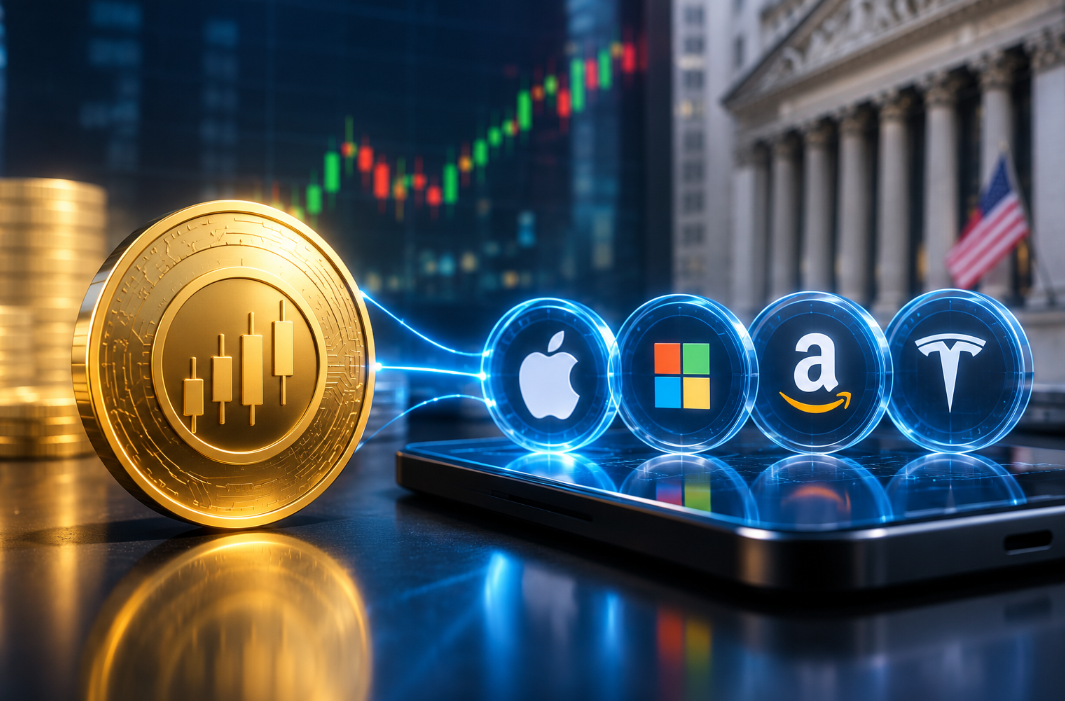
I. What Are Tokenized Stocks?
Tokenized stocks generally refer to digital tokens issued or used to represent stock-related rights through blockchain technology. They are not a single product type; the legal structure, asset custody arrangements, and investor rights of different projects may differ significantly.
To understand tokenized stocks, it is first necessary to distinguish between two common models.
The first is tokenized securities that represent rights in an underlying stock. Such products aim to record and transfer securities-related rights through blockchain, but they still need to comply with applicable securities regulations and clearly define what rights holders enjoy.
The second is tokens or contracts that track stock prices. These products may provide only economic exposure linked to a stock's price and do not necessarily give holders ownership, voting rights, or dividend rights in the actual stock.
Therefore, investors cannot determine whether they hold stock based solely on the product name. Only by reading the issuance documents, custody arrangements, and legal terms can they confirm the specific rights represented by the token.
II. How Does OKXICE Attempt to Connect the Stock Market and Blockchain?
OKXICE is a project launched through cooperation between OKX and entities related to Intercontinental Exchange. According to public reports from October 2026, the project plans to use OKX's XLayer blockchain to conduct tokenized stock trading through Uniswap v4 liquidity pools, settle transactions in stablecoins, and explore round-the-clock trading.
Compared with traditional stock trading, on-chain liquidity pools can execute pre-set trading rules through smart contracts. Eligible participants can trade according to the relevant mechanisms without having to rely entirely on the traditional order book model.
However, on-chain trading does not mean that all restrictions of the stock market disappear. Price formation, liquidity, asset custody, identity verification, and securities trading compliance will still affect how the product actually operates.
In addition, round-the-clock trading does not mean that sufficient liquidity exists at all times. When traditional stock markets are closed, information updates and price discovery mechanisms may change, and bid-ask spreads may widen. Platforms must clearly define trading hours, pricing mechanisms, and rules for handling abnormal market conditions.
III. What Is the SEC's Innovation Exemption?
On September 17, 2026, the U.S. Securities and Exchange Commission (SEC) issued a temporary, conditional exemption arrangement for certain tokenized securities trading venues, commonly referred to as the "Innovation Exemption." The relevant order was published in the Federal Register on September 22.
The arrangement allows eligible tokenized securities trading venues, within specified limits, to use permissioned automated market makers and liquidity pools to trade certain U.S. national market system stocks. The relevant exemption concerns the definition of an exchange under the Securities Exchange Act and also sets limited exemptions for liquidity providers that meet specific conditions.
This does not mean that the SEC has fully approved tokenized stocks, nor does it mean that all cryptocurrency trading platforms can directly conduct related business. Trading venues must meet applicable conditions, including restrictions on product types and trading volume, information disclosure, smart contract audits, and investor protection requirements.
The SEC's official statement also requires trading venues to confirm that holders of the tokenized stocks they offer enjoy the same rights and privileges as holders of traditional stocks in the same category. Trading venues must also stop trading the tokenized stock when the underlying stock stops trading on its primary listing exchange.
This shows that the SEC's regulatory approach is not simply to move stock trading onto the blockchain, but to test new trading mechanisms within a limited scope while retaining important protections of the securities market.
IV. Why Can Listed Companies Object to Their Stocks Being Tokenized?
Under the SEC's relevant exemption framework, if a trading venue plans to offer stocks tokenized by a third party unrelated to the underlying stock issuer, it must send written notice to the issuing company and give it an opportunity to object.
According to the SEC's official FAQ published on October 20, 2026, the 30-calendar-day objection period after issuer notification is an important step in determining whether the relevant stock can enter the trading venue under the exemption arrangement. If the issuer timely raises an objection that meets the requirements, the trading venue cannot offer the corresponding stock under this arrangement.
It should be noted that the 30 days here is the issuer objection period; trading venues also need to meet separate public notice requirements before starting operations, and the two cannot be conflated.
As of October 27, 2026, the number of objections disclosed in OKXICE's public notice had reached 33. Of the 62 companies initially proposed for inclusion, 30 objected, accounting for about 48%. However, this figure only reflects the public objections in a specific project and does not mean that all companies oppose tokenization technology.
Companies may be concerned about issues including: whether tokens will cause investors to misunderstand their relationship with the company, how rights in the underlying stock will be protected, whether prices and liquidity are consistent across different trading venues, and whether companies can fully understand the relevant trading arrangements.
Not all objecting companies publicly explained their specific reasons, so a particular concern cannot be treated as the common position of all companies.
V. What Should Investors Check Before Buying Tokenized Stocks?
For ordinary investors, the appeal of tokenized stocks may come from more flexible trading hours, blockchain infrastructure, and the convenience of digital asset markets. But these features do not mean lower investment risk.
First, confirm the legal rights represented by the token. Investors need to check whether holders have rights in the underlying stock, whether they can receive dividends or participate in voting, and what responsibilities the token issuer, custodian, and trading platform each bear.
Second, understand the asset custody and redemption mechanisms. If a product claims to be backed by real stocks, investors should confirm how the underlying assets are held, how they are verified, and what measures investors can take if the platform encounters operational problems.
Third, pay attention to liquidity and price deviations. Trading prices in on-chain markets may be affected by liquidity, the number of trading participants, and the state of the underlying market. Longer trading hours do not mean that trades can be completed at reasonable prices at any time.
Finally, verify the platform's regulatory status. The SEC's Innovation Exemption has clear applicable conditions. A platform submitting an operating notice does not mean that the SEC has confirmed that it meets all exemption conditions, nor does it mean that the relevant products have received comprehensive regulatory endorsement.
VI. How Will Tokenized Stocks Develop in the Future?
The development of tokenized stocks may further integrate traditional securities markets with blockchain infrastructure, but their commercial value still needs to be tested by the market.
For trading platforms, whether they can provide an attractive range of assets, reliable trading mechanisms, and sufficient liquidity will affect whether users are willing to participate. For issuing companies, whether tokenization can bring clear commercial value and whether shareholder rights are fully protected will also affect their willingness to participate.
For regulators, how to maintain price transparency, market order, and investor protection while supporting technological innovation remains an issue that requires continuous attention.
The OKXICE incident shows that tokenized stocks are not only a technological upgrade but also involve rights relationships among securities issuers, trading platforms, regulators, and investors. Whether the market can expand in the future cannot be judged only by whether blockchain trading functions are complete; it will also require observation of formal regulatory documents, actual operations, and investor protection mechanisms.
Conclusion
Tokenized stocks introduce a new technological path for securities trading, but tokenization does not automatically equal ownership of real stocks, nor does it eliminate the regulatory requirements of traditional securities markets.
The corporate objections encountered by OKXICE reflect the impact of issuers' willingness to participate on the scope of tokenized stock trading. The SEC's Innovation Exemption provides limited room for experimentation for eligible trading venues, rather than comprehensive approval for all tokenized stock projects.
For investors, judging whether such products are worth attention should prioritize understanding the legal rights corresponding to the token, asset custody, trading liquidity, and regulatory conditions, rather than making decisions solely based on promotional features such as round-the-clock trading or blockchain technology.
Frequently Asked Questions (FAQ)
Q1. Are tokenized stocks equal to real stocks?
A: Not necessarily. Different products have different legal structures; some represent stock-related rights, while others merely track stock prices. Investors need to review the specific product documents.
Q2. Has the SEC fully approved tokenized stock trading?
A: No. What the SEC issued on September 17, 2026, is a temporary, conditional exemption arrangement that applies only to trading venues and activities that meet the relevant requirements.
Q3. Can OKXICE trade all U.S.-listed stocks?
A: This should not be understood that way. The trading scope is affected by factors such as regulatory conditions and the issuer objection mechanism, and the specific tradable assets should be based on the project's latest public notice and formal operational information.